
A Nesbit partial and a flipper both replace a missing tooth without surgery, but they’re built for different jobs. Here’s how they compare and which one fits your situation.
By the FixUrSmile Dental Lab team · Updated October 27, 2026 · Part of our complete partial dentures guide
A flipper is a lightweight, low-cost acrylic tooth that’s often used temporarily, for example while an extraction site heals or while you wait for an implant. A Nesbit partial is a small, one-sided partial designed for everyday, longer-term wear. If you want something to wear every day for years, a Nesbit is usually the better choice. If you need a quick, short-term tooth, a flipper is often enough.
Not quite, though the names often get mixed up. A flipper is a simple acrylic tooth set in a plastic base. A Nesbit is a unilateral partial denture, which means it sits on one side of your mouth only and clips onto the teeth next to the gap.
Some labs sell flexible Nesbits as a “Nesbit flipper” because they’re small, removable, and replace just one or two teeth. The design is still a Nesbit: it holds onto the neighboring teeth with clasps and has no plate across the roof of your mouth.
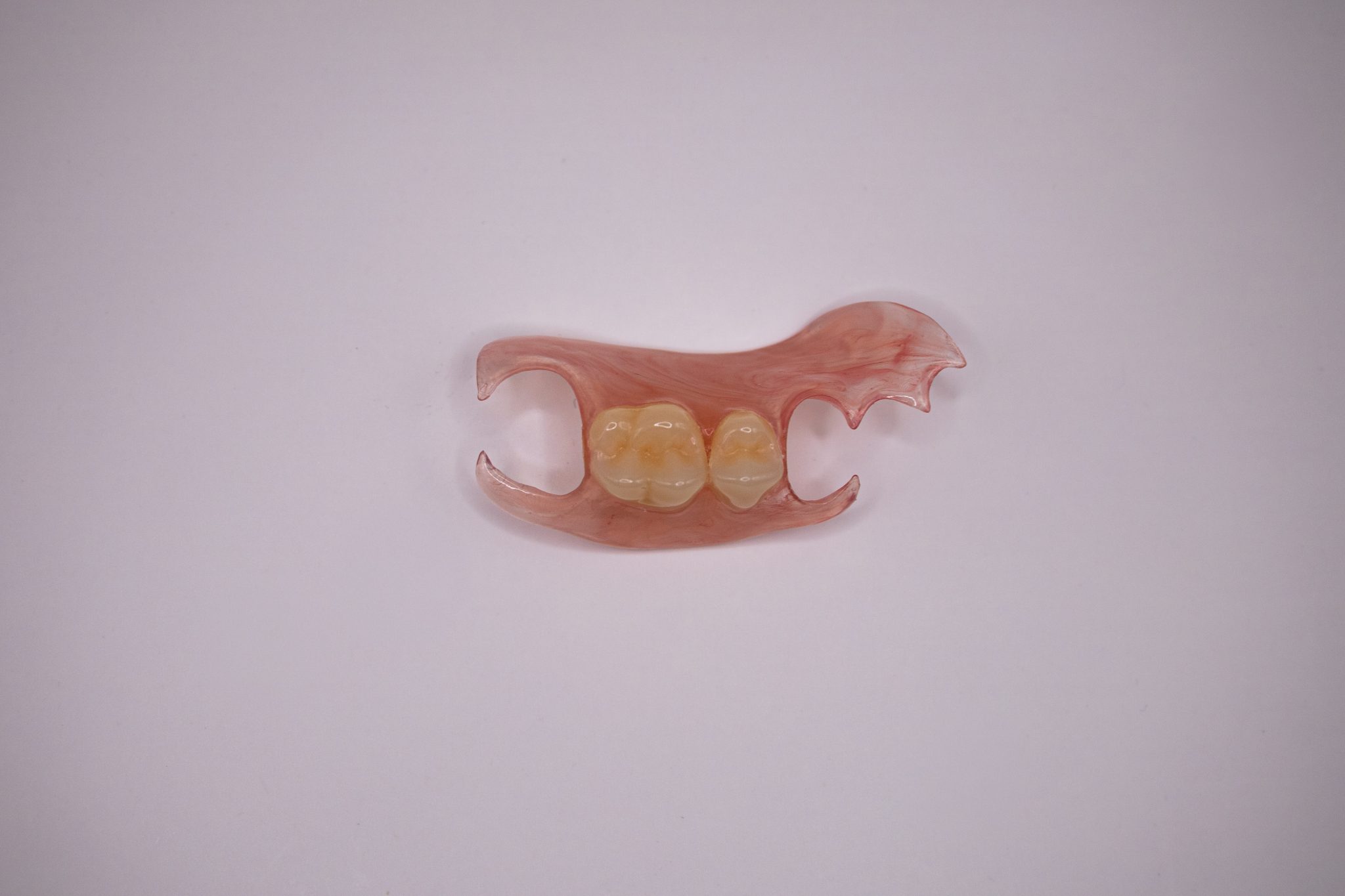
| Nesbit partial | Flipper | |
|---|---|---|
| Teeth replaced | 1 tooth or 2 adjacent teeth on one side | 1 or more teeth |
| Covers the roof of the mouth? | No | Often, on upper flippers |
| Material | Flexible nylon (FixUrSmile) or metal | Acrylic |
| Clasps | Gum-colored (flexible) | Usually none, or simple wire |
| Intended use | Everyday, longer-term wear | Mostly short-term |
| Chewing | Better suited to normal chewing | Not built for heavy chewing |
| Typical cost | $260 at FixUrSmile | About $300–$500 at a dental office* |
| Comfort and bulk | Small and thin; nothing crosses the palate | Bulkier; upper flippers often cover part of the palate |
| Repairs and adjustments | Small fit tweaks are possible; teeth can’t easily be added later | Easy to adjust, but acrylic can crack |
| Wear it to sleep? | No, take it out at night | No, take it out at night |
*Flipper cost range reported by Guardian Life. Prices vary by provider and location.
At a dental office, a flipper tooth typically costs about $300 to $500, according to Guardian Life. Nesbit partials are often priced higher at dental offices because they’re custom-fitted with clasps, and fees vary widely by provider and location.
Ordering from a dental lab online usually costs less because you take your impressions at home. A FixUrSmile Nesbit flexible partial is $260 for one tooth or two side-by-side teeth, and your second product is 15% off if you’d like a backup. See more in our partial dentures cost guide.
Learn more in what is a Nesbit partial.
See our flipper tooth guide and can you eat with a flipper tooth.
If you’re missing more than two teeth, or teeth on both sides, a full partial is usually the right choice: a metal-free flexible partial ($315 for 1–3 teeth) or an acrylic partial ($245 for 1–3 teeth). Compare all of them in our partial denture comparison.
For everyday, long-term wear, usually yes. A Nesbit is smaller, doesn’t cover the roof of your mouth, and is built for normal chewing. A flipper is lighter and simpler, which makes it a good short-term option.
A FixUrSmile Nesbit flexible partial is $260 for one tooth or two adjacent teeth, made from your at-home impressions.
Yes. Start with soft foods cut into small pieces, then return to your normal diet as you get used to it. Avoid very sticky or hard foods.
Small one-sided partials must fit well so they stay securely in place. Take a Nesbit out at night, and if it ever feels loose, stop wearing it and contact us or your dentist. A licensed dentist reviews every FixUrSmile case.
No. A flipper is an acrylic tooth on a plastic base that’s usually worn short term. A Nesbit is a small, one-sided partial with clasps that’s made for everyday wear.
If you’re missing one tooth or two side-by-side teeth on one side and want a low-profile, metal-free option for daily wear, many people find a Nesbit worth it. It costs far less than an implant or bridge, but it’s removable and doesn’t replace the tooth root the way an implant does.
No. Because a Nesbit is small, take it out before bed so it can’t come loose while you sleep. Taking it out also gives your gums a rest.
With daily cleaning and careful handling, a flexible Nesbit can last for years. Your fit can change as your teeth and gums shift, so keep up with regular dental checkups.
Metal-free Nesbit partial, $260. Made in our US dental lab from impressions you take at home, with licensed dentist review and our Custom Fit Guarantee.