
Daily cleaning keeps your partial denture fresh, prevents stains, and protects your natural teeth and gums. Here’s a simple routine.
By the FixUrSmile Dental Lab team · Updated September 2026 · Part of our complete partial dentures guide
Flexible (metal-free) partials can stain and are sensitive to harsh chemicals. Use cleaners made for flexible or nylon dentures, brush gently, and never use bleach or hot water. Learn more in our flexible dentures guide.
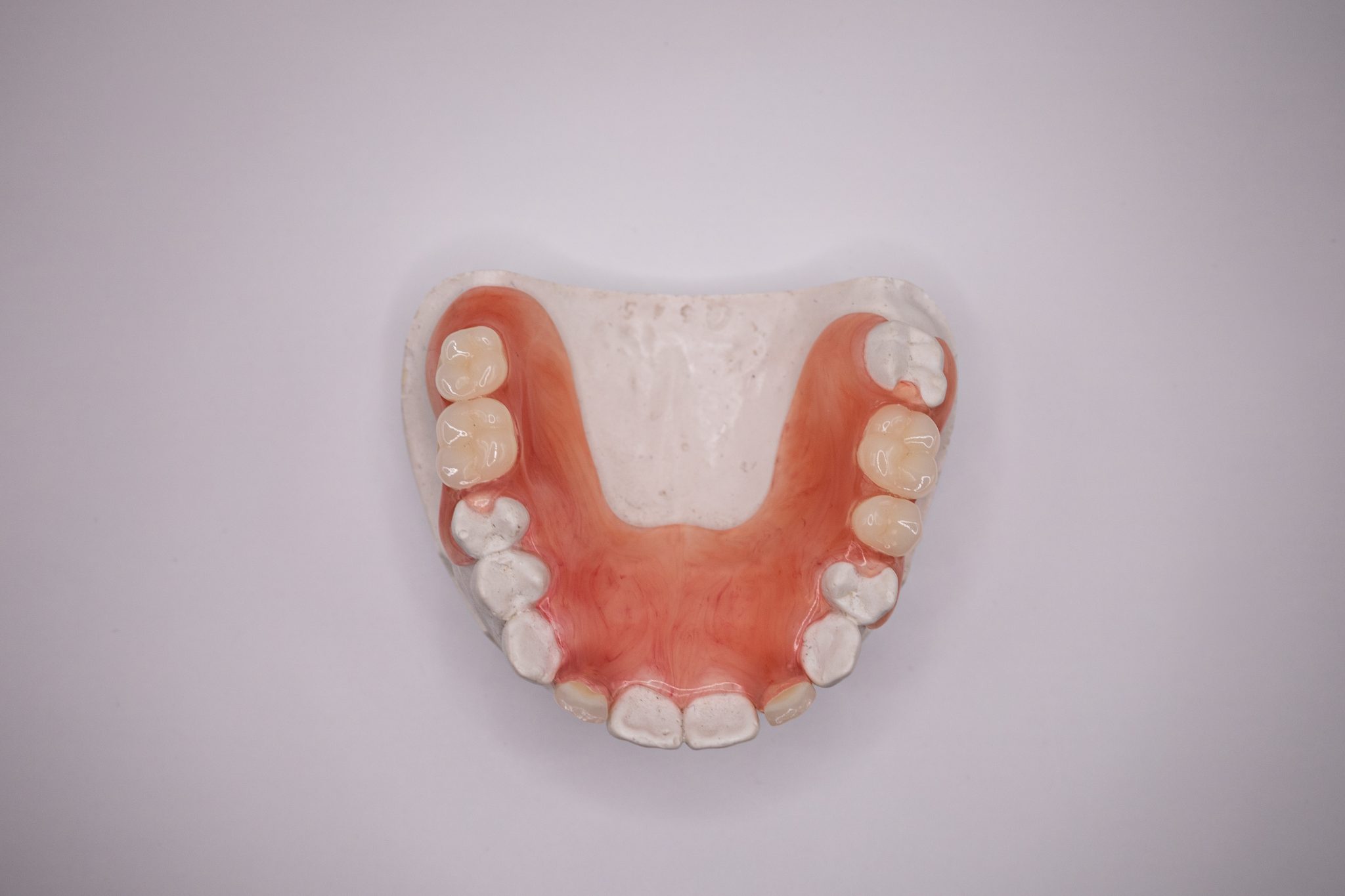
Acrylic partials handle regular denture cleaners well. Avoid soaking cleaners that contain bleach if your partial has metal clasps, since they can tarnish metal. Brush carefully around the clasps.
FixUrSmile partials include a Custom Fit Guarantee: report fit issues within 30 days for a free adjustment.
Related guides: how long partial dentures last
It’s best not to. Regular toothpaste is abrasive and can scratch denture material. Use a denture cleaner or mild soap.
Most dentists recommend removing partial dentures at night to rest your gums and clean the appliance, unless your dentist tells you otherwise.
With good care, partial dentures commonly last several years, but changes in your mouth can affect fit over time.
Flexible, acrylic, and Nesbit partials from $245. Made in our US dental lab from impressions you take at home, with licensed dentist approval and our Custom Fit Guarantee.
An Essix retainer is a clear, vacuum-formed plastic retainer. Learn how it compares to Hawley retainers, what it costs, …
Acrylic partial dentures are an affordable way to replace missing teeth. Compare them to flexible and metal partials and…
How upper and lower partial dentures differ, which types work best for each arch, what they cost, and tips for getting a…