
Acrylic partials are one of the most affordable and adjustable ways to replace missing teeth. Here’s how they compare to flexible and metal options.
By the FixUrSmile Dental Lab team · Updated September 2026 · Part of our complete partial dentures guide
An acrylic partial denture is a removable appliance with a rigid, gum-colored acrylic base that holds one or more artificial teeth. Most use small wire clasps that hook around nearby natural teeth to keep the partial in place. A small acrylic partial that replaces one or a few teeth is often called a flipper tooth.
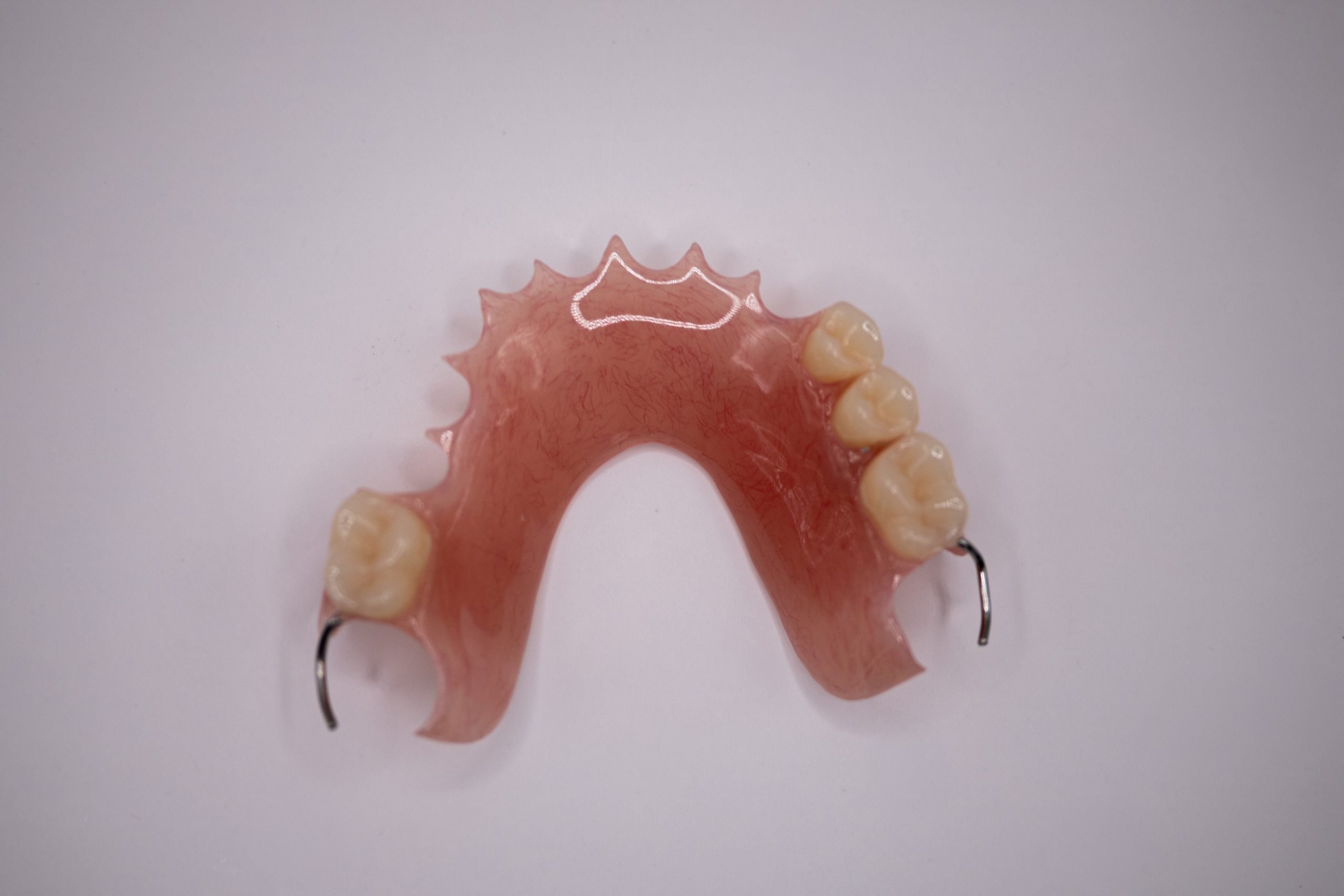
| Acrylic | Flexible | Cast metal | |
|---|---|---|---|
| Base | Rigid pink acrylic | Thin, bendable resin | Metal framework with acrylic |
| Clasps | Wire | Gum-colored, no metal | Metal |
| Adjustable? | Yes, easily | Limited | Moderately |
| Typical dental office cost* | $300–$500 (flipper) | $900–$2,000 | $650–$2,500 |
| FixUrSmile price | $245 (1–3 teeth), $295 (4–6) | $315 (1–3 teeth), $399 (up to 6) | Not offered |
*Ranges reported by Guardian Life. Actual prices vary.
Want help choosing? See which partial denture is right for me.
At a dental office, a small acrylic partial (flipper) typically costs about $300 to $500, according to Guardian Life, and larger acrylic partials cost more. FixUrSmile’s custom acrylic partial is $245 for 1–3 teeth and $295 for 4–6 teeth, including the impression kit and free return shipping. More detail: partial dentures cost guide.
With good care, acrylic partials often last several years. Fit can change over time as gums and bone reshape, which is one reason acrylic’s easy adjustability is useful. Replace or reline your partial if it cracks, rocks, or causes sore spots.
Full guide: how to clean partial dentures.
They’re a solid, affordable choice for many people, especially if you want something easy to adjust or add teeth to later. People who want no visible metal often prefer a flexible partial instead.
A flipper is a small acrylic partial, usually replacing one to a few teeth. Larger acrylic partials work the same way but replace more teeth.
Yes. Acrylic is one of the easiest denture materials to repair, reline, or add teeth to.
Dental offices typically charge about $300 to $500 for a small acrylic partial. FixUrSmile acrylic partials are $245 for 1–3 teeth and $295 for 4–6 teeth.
Made from your own impressions, from $245. Made in our US dental lab from impressions you take at home, with licensed dentist approval and our Custom Fit Guarantee.
How upper and lower partial dentures differ, which types work best for each arch, what they cost, and tips for getting a…
Yes, you can eat with a flipper tooth, with some care. Learn which foods are easiest, which to avoid, and tips to protec…
Night guards protect teeth from grinding; retainers keep teeth from shifting. Learn the differences, whether one can rep…