
Missing one or a few teeth? A partial denture is one of the simplest, most affordable ways to fill the gap. This guide covers every option, cost, and step.
By the FixUrSmile Dental Lab team · Updated September 2026
A partial denture is a removable appliance that replaces one or more missing teeth when you still have some natural teeth. It has a gum-colored base that holds artificial teeth, and it stays in place by gripping nearby natural teeth with clasps, or with gum-colored flexible extensions in metal-free designs.
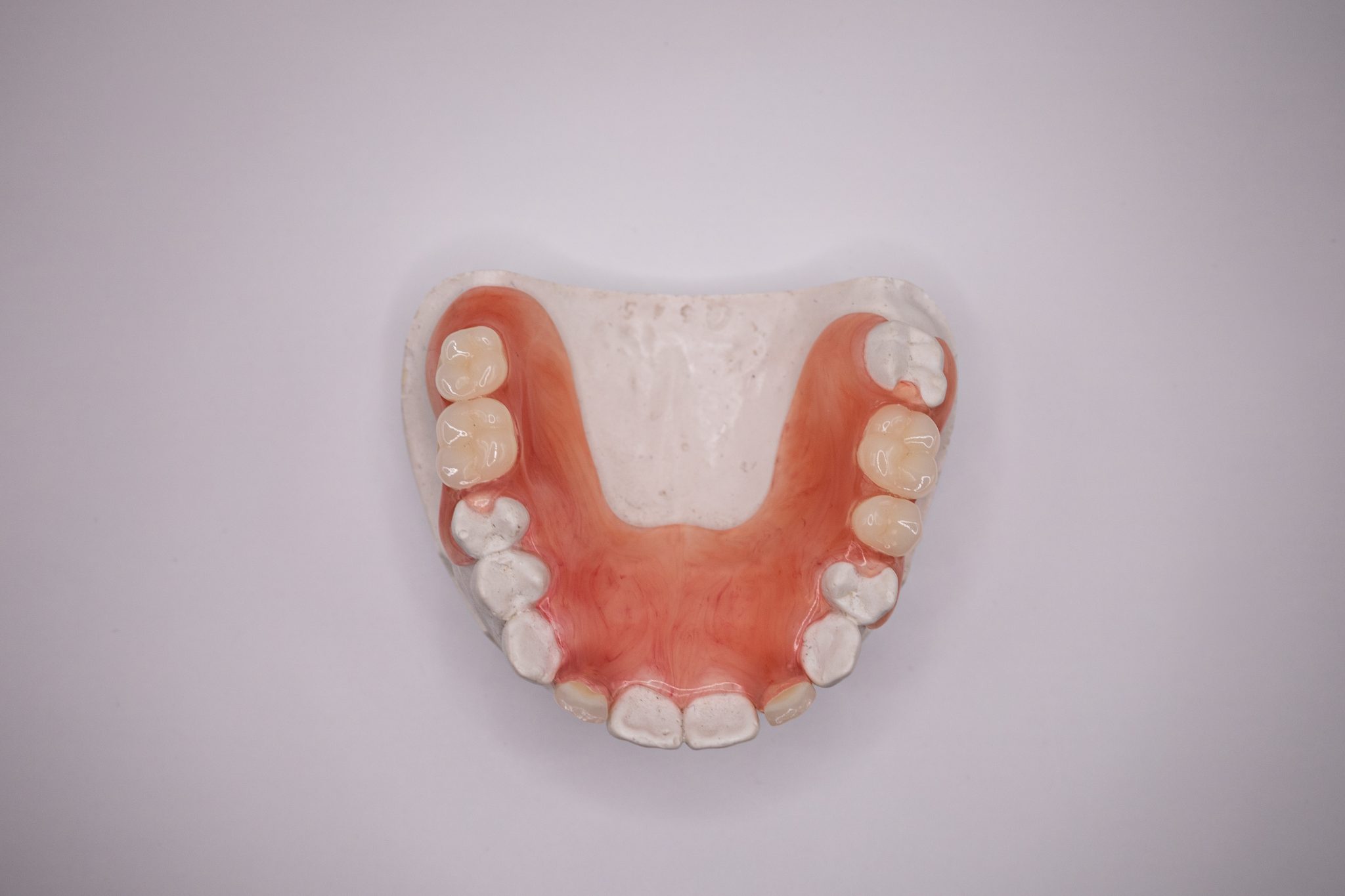
Unlike a full denture, which replaces every tooth in an arch, a partial fills only the gaps. Unlike an implant or bridge, it needs no surgery and doesn’t require reshaping healthy teeth.
If you have loose teeth, gum disease, pain, or swelling, see a dentist before getting any partial.
| Type | What it is | Best for | Guide |
|---|---|---|---|
| Acrylic | Rigid pink acrylic base with wire clasps | Lowest cost, easy to adjust | Acrylic partials |
| Flexible | Thin, bendable, metal-free resin | No visible metal, comfort | Flexible dentures |
| Nesbit | Small one-sided partial | 1–2 adjacent teeth on one side | Nesbit partials |
| Flipper | Small acrylic partial | A single tooth, often temporary | Flipper tooth |
| Cast metal | Metal framework with acrylic teeth | Long-term wear, made by a dentist | All types |
Not sure which is right for you? Use our partial denture comparison.
At a dental office, partial dentures typically range from about $300 to $2,500 depending on type and how many teeth they replace, according to Guardian Life. Flexible partials commonly run about $900–$2,000, and cast metal partials about $650–$2,500.
| FixUrSmile partial | Teeth replaced | Price per arch |
|---|---|---|
| Acrylic Partial Denture | 1–6 | $245 (1–3), $295 (4–6) |
| Flexible Partial Denture | 1–6 | $315 (1–3), $399 (up to 6) |
| Nesbit Flexible Partial | 1 or 2 adjacent | $260 |
Full breakdown: partial dentures cost guide.
Upper partials can use the roof of the mouth for extra support, while lower partials sit in a narrower space around the tongue and rely more on clasps and remaining teeth. Learn more in upper and lower partial dentures, and for molars, see partial dentures for back teeth.
Most removable partials last several years with good care. Acrylic can be adjusted and relined; flexible partials are harder to adjust and are usually replaced when the fit changes. Replace a partial that cracks, rocks, or causes sore spots.
Every FixUrSmile partial is backed by our Custom Fit Guarantee, and your second product is 15% off automatically.
When people search for “permanent partial dentures,” they usually mean one of two things:
A removable partial denture (often just called a “partial”) clips onto your natural teeth and comes out for cleaning and sleeping. It’s the most affordable option and doesn’t require drilling healthy teeth. Every FixUrSmile appliance is a removable partial.
| Type | Best for | Clasps | How it feels | FixUrSmile price |
|---|---|---|---|---|
| Acrylic partial | Budget-friendly replacement of 1 to 6 teeth; teeth can often be added later | Metal wire | Thicker and rigid | From $245 |
| Flexible partial (nylon, similar to Valplast) | Comfort and a natural look | Gum-colored, no metal | Thin and slightly flexible | From $315 |
| Nesbit partial | One missing tooth, or two teeth side by side, on one side of the mouth | Gum-colored, no metal | Smallest and lightest | $260 |
| Cast metal partial | Many missing teeth and long-term use | Metal framework | Thin and very strong | Made through a local dentist |
| Flipper (temporary partial) | Short-term use, such as while an extraction site heals | Usually none, or simple wire | Lightweight, not built for heavy chewing | Priced like an acrylic partial |
Not sure which fits your situation? Our partial denture comparison guide and Product Finder walk you through it in a couple of minutes.
Dentists use maxillary for the upper arch and mandibular for the lower arch. An upper partial rests partly on the roof of the mouth and the upper gums, while a lower partial sits in a narrower horseshoe shape around the tongue. Lower partials can take a little longer to get used to because the tongue moves against them. You can order either arch, or both, from FixUrSmile.
Front teeth: appearance comes first. Flexible and Nesbit partials are popular here because the clasps are gum-colored instead of metal, so they’re hard to spot when you smile.
Back teeth and molars: chewing comes first. Back teeth handle the heaviest biting forces, so a well-fitted partial that spreads pressure across your gums and neighboring teeth matters most. Read more in our guide to partial dentures for back teeth.
A partial has three main parts:
You’ll see each style on our shop page.
| Removable partial | Bridge (fixed partial) | Dental implant | |
|---|---|---|---|
| How it stays in | Clasps on nearby teeth | Cemented to crowned teeth | Post placed in the jawbone |
| Affects healthy teeth? | No drilling needed | Neighboring teeth are reshaped for crowns | No |
| Surgery? | No | No | Yes |
| Removable for cleaning? | Yes | No | No |
| Typical cost | Lowest | Moderate | Highest |
A dentist can tell you which option fits your mouth best. If a removable partial is right for you, FixUrSmile lets you order one without extra clinic visits.
Related guides: partial denture for one tooth · partial dentures for front teeth · how long partial dentures last · how the at-home impression kit works
Acrylic partials, including small flippers, are usually the least expensive. FixUrSmile acrylic partials start at $245 for 1–3 teeth.
Yes. With FixUrSmile you take impressions at home, a licensed dentist reviews your case, and our lab makes your partial. If you have pain, loose teeth, or gum problems, see a dentist first.
A well-made partial blends in with your natural teeth. Flexible partials use gum-colored clasps instead of metal, so they’re often chosen for front teeth.
FixUrSmile partials replace 1 to 6 teeth per arch. Nesbit partials replace 1 tooth or 2 adjacent teeth on one side.
Most dentists recommend removing removable partials at night so your gums can rest. Follow your dentist’s advice.
Yes. “Fixed partial denture” is the clinical term for a dental bridge. A dentist cements it to crowned teeth on either side of the gap, so you can’t remove it. A removable partial denture clips in and comes out for cleaning.
Yes. A Nesbit partial is designed for one missing tooth or two teeth side by side on one side of the mouth. Flexible and acrylic partials can replace one tooth or several.
A flipper is a small, lightweight temporary partial, often worn while an extraction site heals. A standard partial denture is built for everyday chewing and long-term wear.
Maxillary means upper and mandibular means lower. A maxillary partial replaces upper teeth, and a mandibular partial replaces lower teeth.
Acrylic, flexible, and Nesbit partials from $245. Made in our US dental lab from impressions you take at home, with licensed dentist review and our Custom Fit Guarantee.
What a Hawley retainer is, how it compares to clear Essix retainers, how much each costs, how long they last, and how to…
What a permanent (bonded) retainer is, its pros and cons, what it costs, how long it lasts, and when a removable clear r…
Replacing missing back teeth or molars? Compare Nesbit, flexible, and acrylic partials for back teeth, what they cost, a…